Call Us: 063-916-8802
Email: info@eddhealth.co.th


.png)
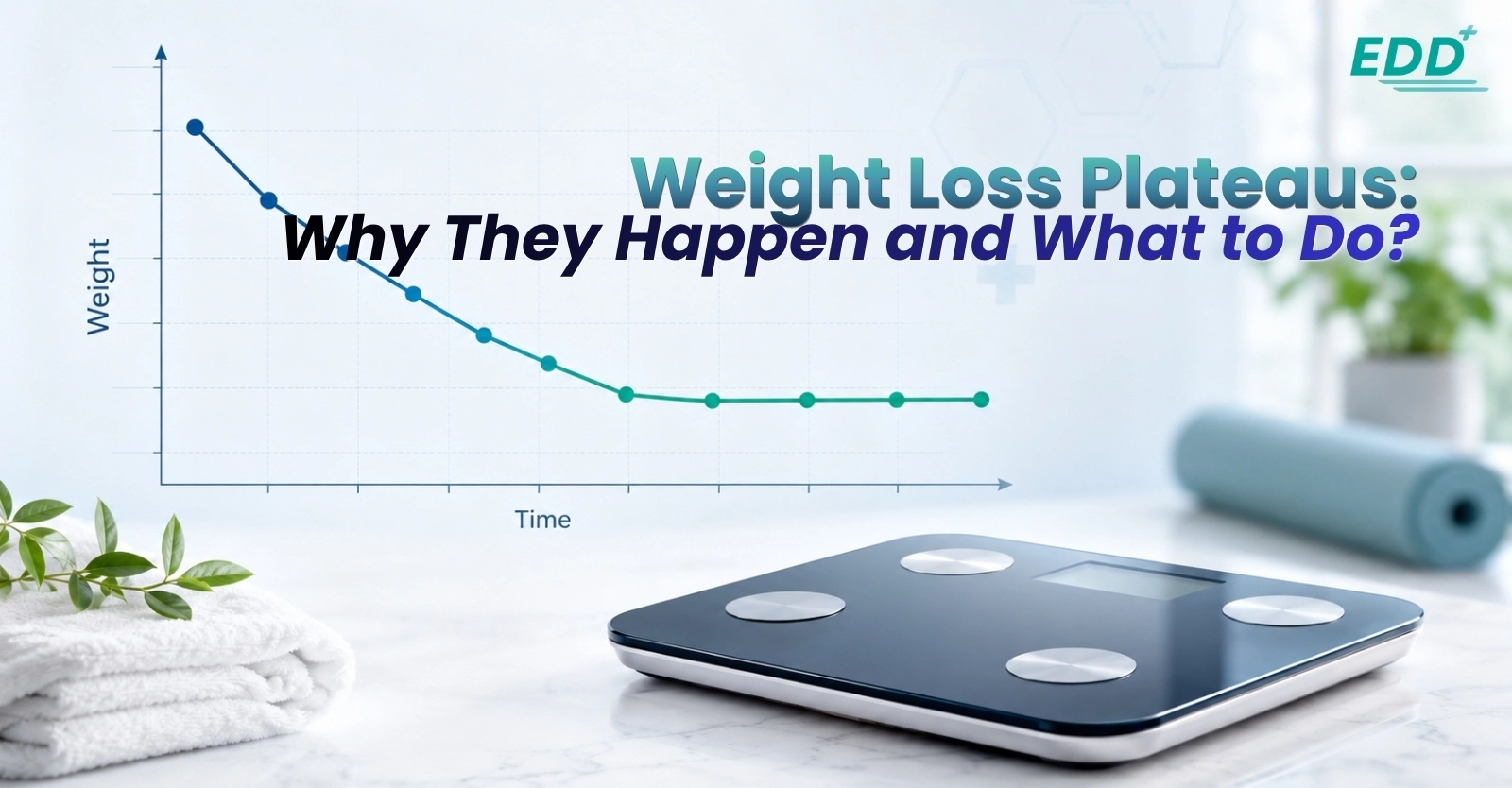
At first, many people experience consistent weight loss. Week by week, month by month, the number on the scale keeps falling. Then, despite continuing with the same routine, the scales stop moving. Stepping on the scales is no longer something to look forward to. Instead, it becomes a source of frustration as the same number appears again and again.
Weight loss plateaus are a common part of the journey, but that doesn’t make them any less discouraging. While weight loss is often described as a simple matter of calories in versus calories out, the reality is usually more complex. Your metabolism adapts, your body composition changes, and even small changes in eating habits or physical activity can all contribute to progress slowing or stopping altogether.
Below, we explain what causes a weight loss plateau, how to break through one, and whether medical treatments may help you continue progressing towards your weight loss goals.
A weight loss plateau is a period during which your body weight remains largely unchanged despite continuing your weight loss efforts. While it can be frustrating, it is also a normal part of the weight loss process.
The confusion often comes from not understanding why the scales have stopped moving. A stable weight doesn't necessarily mean you've stopped losing body fat.
Daily fluctuations in body weight are common. Water retention, the amount of food in your digestive system, salt intake, hormonal changes, and even the time of day you weigh yourself can temporarily mask fat loss. For this reason, it's generally best to wait at least two weeks before concluding that you've reached a true weight loss plateau.
One of the most common reasons for a weight loss plateau is that your calorie needs have changed. A calorie intake that once created a deficit may no longer be enough as you lose weight.
This is because a smaller body requires less energy to function. Carrying extra weight also increases the number of calories you burn during everyday activities. As your weight decreases, your body naturally burns fewer calories, even if your diet and exercise routine remain the same.
This doesn't mean your metabolism has stopped working or that your weight loss has failed. It's a normal response to losing weight. To continue making progress, you may need to reassess your calorie intake, increase your physical activity, or combine both approaches.
As you lose weight, your body becomes more efficient at using energy. A smaller body naturally burns fewer calories, but in some cases, energy expenditure falls by slightly more than would be expected from the reduction in body weight alone.
This response is known as adaptive thermogenesis. It is the body's way of conserving energy as fat stores decrease.
At the same time, hunger hormones may increase, making it more difficult to maintain the same eating habits over time. As a result, the calorie deficit that initially produced steady weight loss can gradually shrink or disappear altogether.
Research published by the National Institutes of Health suggests that the degree of this metabolic adaptation varies between individuals and may help explain why some people lose weight more easily than others.
When you lose weight, you're not just losing body fat. Some muscle loss is also common, particularly if you're not consuming enough protein or including resistance training as part of your routine.
Muscle tissue burns more calories than fat, even at rest. As a result, losing lean muscle mass can reduce the number of calories your body needs each day. Over time, this can make it harder to maintain the calorie deficit that initially drove weight loss, increasing the likelihood of reaching a plateau.
Before making any changes, it's important to confirm that your progress has genuinely stalled. If you're not already doing so, track your weight under consistent conditions, such as at the same time of day and wearing similar clothing. Rather than focusing on daily fluctuations, compare your weekly average weight over two or more weeks.
The scales aren't the only way to measure progress. Pay attention to how your clothes fit and take regular body measurements if possible. If your clothes are becoming looser despite little change in body weight, you may still be losing body fat while gaining muscle, particularly if you've recently started resistance training or lifting progressively heavier weights .
Once you've confirmed that you've reached a genuine weight loss plateau, the following strategies can help get your progress moving again.
Track your usual food and drink intake for several days. This can help identify larger portion sizes, high-calorie snacks, or calorific drinks that may have gradually crept into your routine without you noticing.
If you've already lost a significant amount of weight, recalculate your daily calorie requirements. As your body becomes smaller, it needs less energy. Making modest adjustments to your calorie intake is usually more effective and sustainable than making drastic cuts.
A reduction in daily movement is another common reason for a weight loss plateau. Even if your diet hasn't changed, walking less, sitting more, or missing regular workouts can reduce the number of calories you burn each day.
You don't necessarily need to spend more time in the gym. Simple changes, such as taking more steps, using the stairs, doing household chores, or reducing the amount of time you spend sitting, can all help increase your daily energy expenditure.
Resistance training, combined with adequate protein intake, helps preserve lean muscle mass during weight loss. Maintaining muscle supports a healthy metabolism and improves body composition by encouraging fat loss while reducing muscle loss.
If you're new to resistance training, you may also gain some muscle while losing fat. Although this doesn't dramatically increase the number of calories you burn, preserving and building lean muscle can make it easier to maintain weight loss over the long term.
For some people, hitting a weight loss plateau represents a real wall. Maybe your life just doesn’t let you move more. Maybe cutting calories further is just too much of an ask.
That’s where weight loss medication can help.
Treatments such as GLP-1-based medications can reduce appetite and help people feel full sooner, making a consistent calorie deficit easier to maintain. However, they work best alongside appropriate nutrition, regular activity and behavioral support rather than as a replacement for them.
A plateau doesn’t automatically mean medication is needed. It's usually worth reviewing your diet, activity levels, and other lifestyle factors first. However, if you've already made these adjustments and your progress has stalled, weight loss injections may be an option worth exploring to help you continue working towards your goals.
If your weight has remained unchanged despite several weeks of consistent changes to your diet and activity levels, it may be time to consider additional support. For some people, prescription weight loss medication can help overcome a plateau when lifestyle changes alone are no longer producing results.
EDD Health makes it easy to access prescription weight loss treatment online. You can order Wegovy or Mounjaro in Thailand through a simple, discreet online consultation, with medication delivered directly to your door.
If a weight loss plateau is preventing you from making further progress, explore our online weight loss treatment options and take the next step towards your goals.